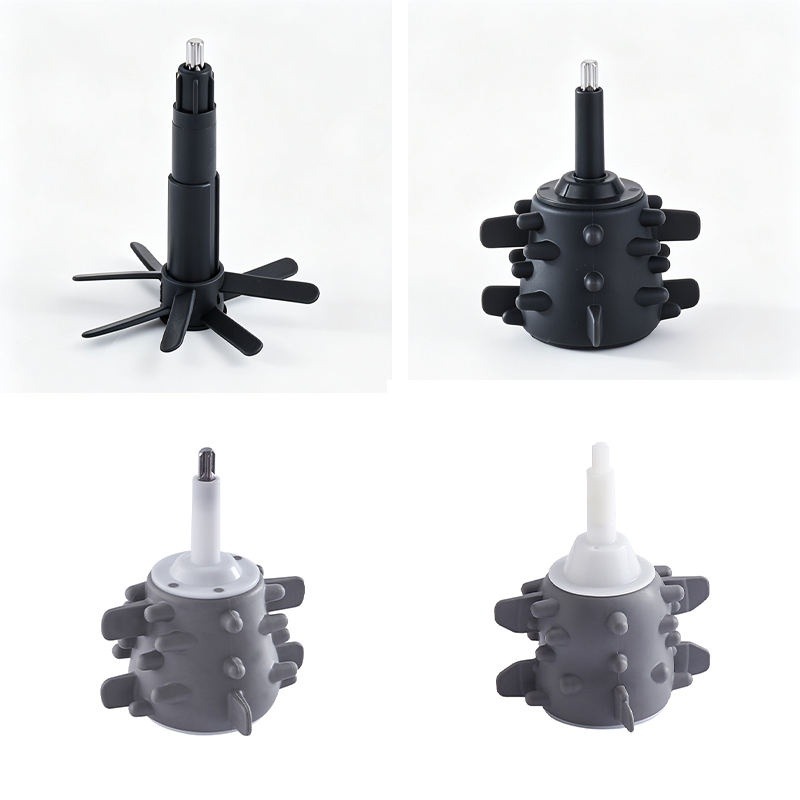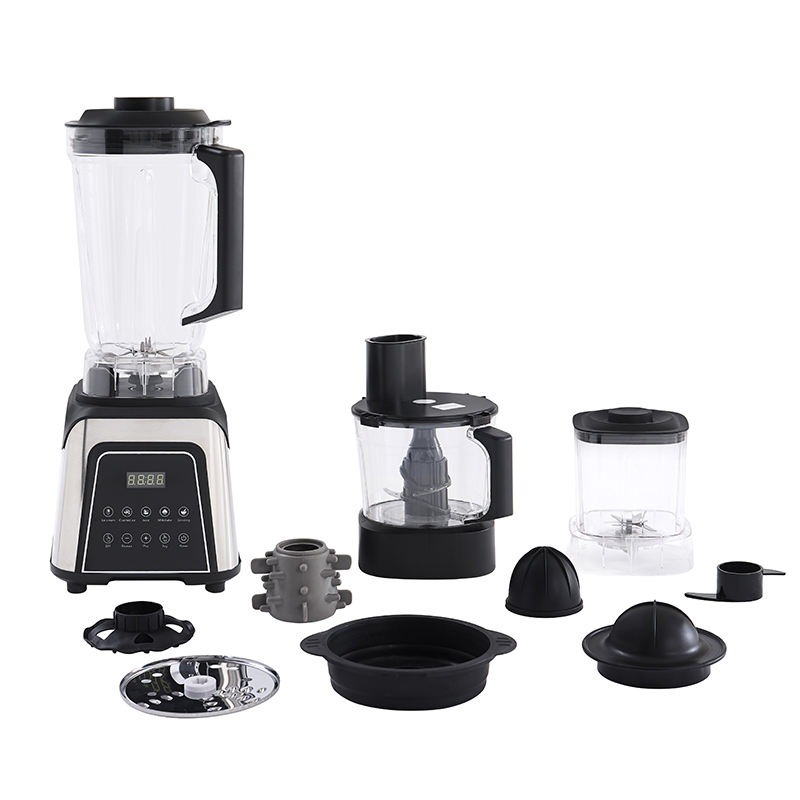
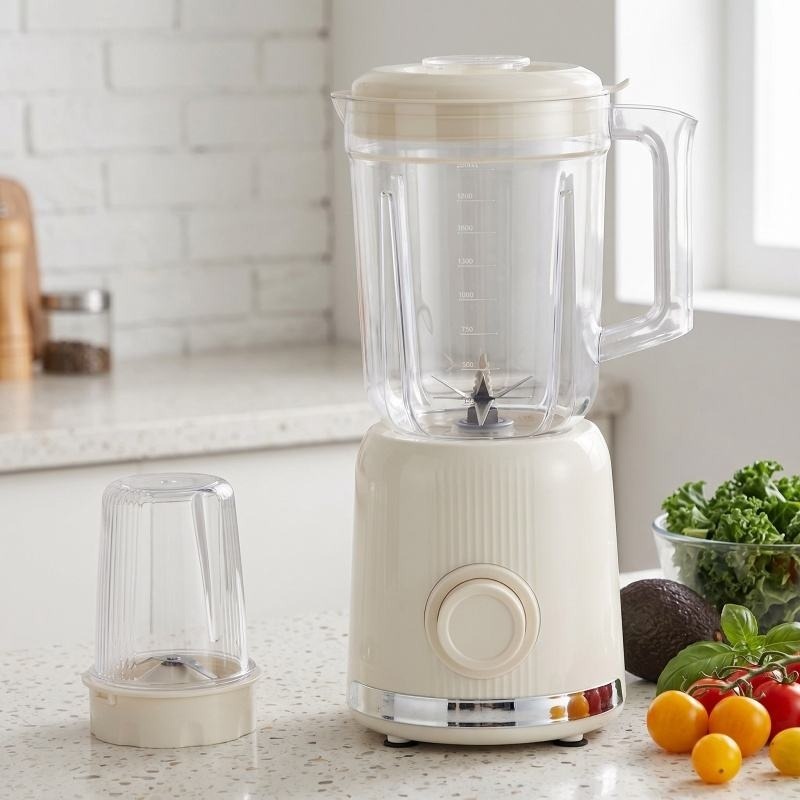
Plastic is a product refined from petroleum, and it is used widely in high-speed blenders and electric meat grinders — the categories buyers search for most often as “high-speed blender”, “blender for smoothies”, “electric meat grinder” and “food chopper”. Every part, whatever its shape or function, calls for a different plastic. Langfang Jindu Household Products Co., Ltd. has more than fifteen years of injection-moulding experience. Below we explain how to tell apart the plastics most often used in small kitchen appliances, so that buyers can compare quotations with more confidence. You are also welcome to visit our Alibaba store (https://jindujiaju.en.alibaba.com/) or our official website (https://jindubrand.com/).
Small rubber parts decide whether a machine feels solid: the feet that stop it walking across the counter, the ring that stops soup climbing out of the lid.
TPE is the modern default. It is a thermoplastic elastomer, so it can be injection moulded on the same machine as the housing, bonded to rigid plastic, coloured to match, and reground at the end of the run. Depending on the grade it covers roughly 30–90 Shore A, stays flexible from about -40 °C to 120 °C, and gives good grip with low compression set. It is recyclable, which matters for European buyers.
TPR is its cheaper cousin — usually a styrenic rubber compound. It feels similar, moulds easily and costs less, but it tolerates less heat, around 100 °C, and ages faster under oil and repeated washing. For a non-critical foot pad or a decorative grip, it is often enough.
Silicone (SR) is a thermoset, and that changes everything. It holds from about -50 °C to 200 °C and beyond, keeps its elasticity after thousands of compression cycles, and is naturally tasteless and odourless. It is the right answer for steam rings, oven-adjacent seals and anything that meets hot food — and it is the most expensive, cannot be remelted, and needs longer cycle times.
Our short rule: TPE for the general case, TPR where the budget is tight and the duty is light, silicone where heat or food contact is the whole point. Send us the working temperature and the compression load, and we will pick the grade with you.