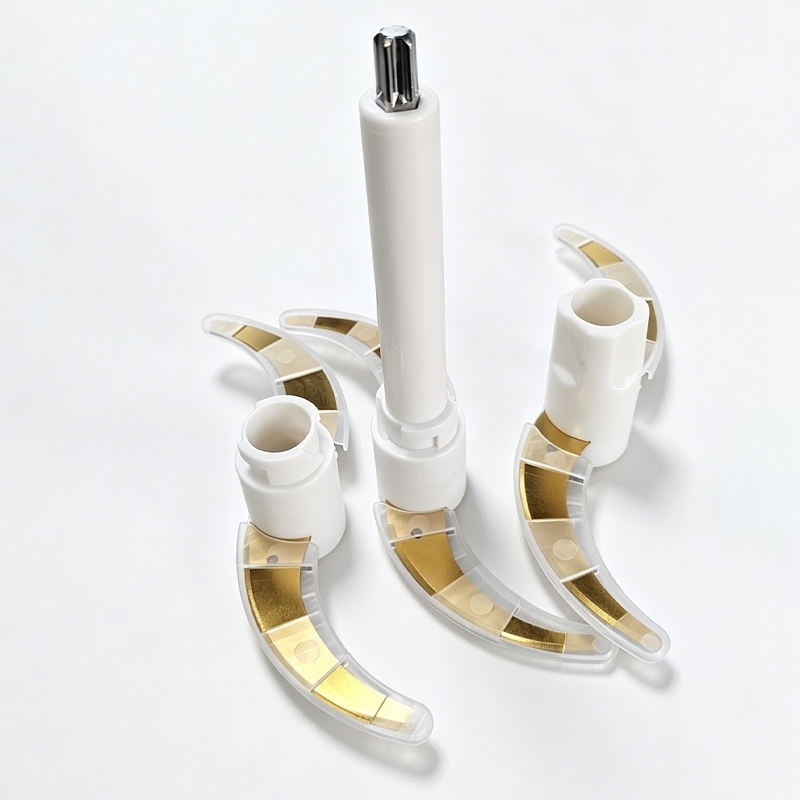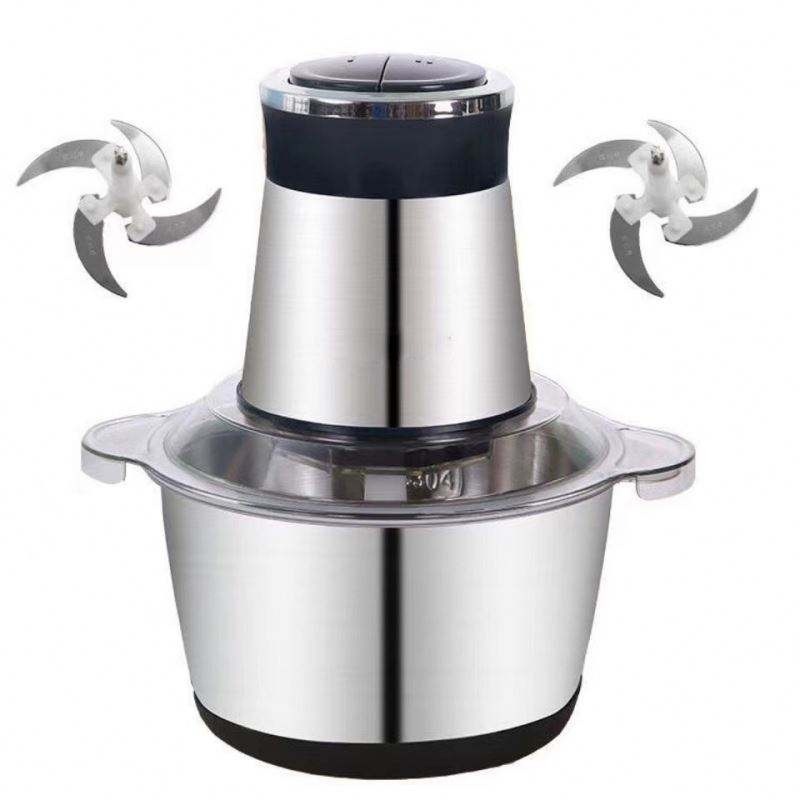
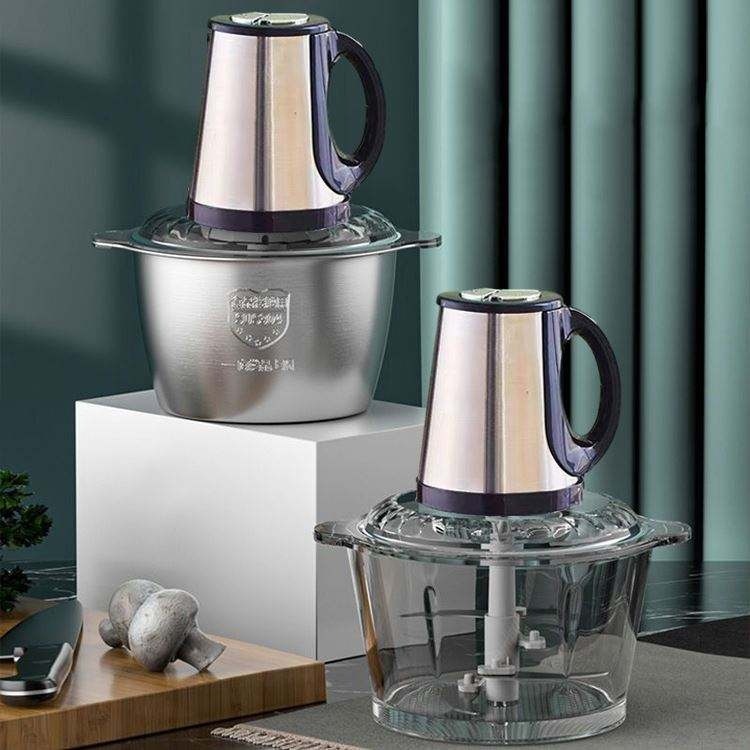
Plastic is a product refined from petroleum, and it is used widely in high-speed blenders and electric meat grinders — the categories buyers search for most often as “high-speed blender”, “blender for smoothies”, “electric meat grinder” and “food chopper”. Every part, whatever its shape or function, calls for a different plastic. Langfang Jindu Household Products Co., Ltd. has more than fifteen years of injection-moulding experience. Below we explain how to tell apart the plastics most often used in small kitchen appliances, so that buyers can compare quotations with more confidence. You are also welcome to visit our Alibaba store (https://jindujiaju.en.alibaba.com/) or our official website (https://jindubrand.com/).
Inside a meat grinder, the gear set is where a cheap design shows up first — as noise, as slipping, or as a tooth sheared off in the third month.
POM (acetal) is the classic choice for small gears. It is stiff, has a low coefficient of friction, almost no moisture absorption and excellent dimensional stability, so a POM gear keeps its backlash from the first cycle to the ten-thousandth. It runs quietly against itself and machines beautifully. Its limit is temperature and load: above roughly 90–100 °C, or under a heavy stall torque, it can deform or strip.
PA (nylon) trades some stiffness for toughness. It absorbs shock better, works at higher temperatures — around 120 °C for PA6 and more for glass-filled PA66 — and resists abrasion under load. The price is moisture: nylon takes up water from the air, grows slightly, and changes its clearance with the season. It also needs thorough drying before moulding, or the parts come out with silver streaks and weak weld lines.
So we match the material to the duty: POM for the small, fast, lightly loaded gears; PA, often glass-filled, for the first-stage gear that takes the motor’s torque and the heat behind it. Ask us for the gear drawing and the stall torque, and we will tell you where the line sits.