
Quick answer: how many spares go into a container decides whether a broken machine waits two weeks or two months.
One company shipped full containers of finished units and no spares at all. The reasoning sounded sensible — save the cost. Then the first machine failed at the buyer’s warehouse and the only option was the next container, two months out. The urgent fix went by air, and the argument started over who pays the freight. Whatever was saved was paid back in express shipping and one return.

At Langfang Jindu Household Products Co., Ltd. (https://jindubrand.com/) that decision is made before the order is confirmed: spares at 1.5%–3% of volume, and not spread evenly — weighted by failure rate. Motor, seals and switch come first, because they account for the largest share of the five common failures.
The ratio is not a guess. Too few and the buyer waits for the next vessel; too many and capital sits in a warehouse. The 1.5%–3% band is what lets the most common failures be repaired locally, instead of upgrading a small problem into a whole-unit replacement.
One clause is usually forgotten: who pays freight on a separate top-up shipment. Leave it out and all the arithmetic above collapses. We write it into the contract — top-ups shipped with a container are on us in the first year, later ones are settled per shipment at prices listed in the annex.

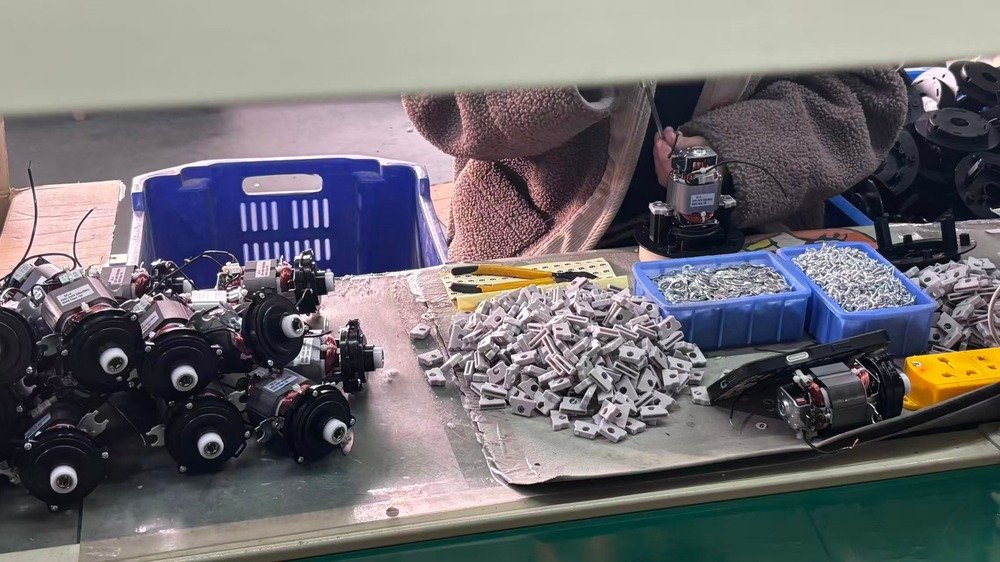
This works because we do not buy the parts in: the motors are wound here, the moulds and stampings are made here, and spares come off the same line as the machines. 8,500 m², more than 200 people, 10,000 units a day, five workshops in one park — once the ratio is agreed, a top-up does not wait in an outside supplier’s queue. The 12-month warranty stands on the same logic: without parts on the shelf, a warranty is only a sentence.
Which parts get weighted highest is not a fixed list either. Before the first order we look at the market: a buyer selling into humid coastal cities will burn through seals faster, one selling to commercial kitchens will see more motor and switch claims. The ratio stays inside the same band, but what sits inside it moves.
After-sales starts on the day the spare-parts clause is signed.
Order now — inquiry: https://jindubrand.com/contacts/ · Alibaba store: https://jindujiaju.en.alibaba.com/
One thought