
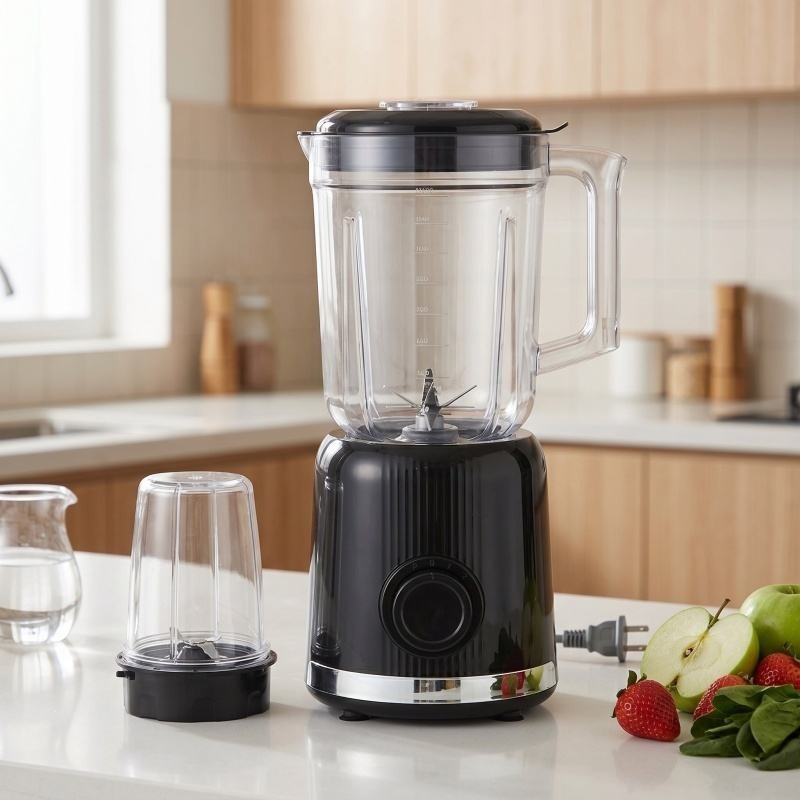
Most buyers say “OEM” and mean three very different projects. Knowing which one you are asking for is the difference between a four-week order and a nine-month development.
Level one is private label. Your logo on the housing, your colour box, your manual, your rating label. The tooling stays ours, the certification stays ours, and you can be shipping in weeks. This is the right level for testing a market or adding a line without capital risk.
Level two is specification change: a different motor, a different voltage and plug, a different speed curve, a different colour family. The mould is still shared, but the BOM is yours, and the certification file has to be extended for your market.
Level three is co-development. A new housing, a new bowl, a new transmission — your market brief, our engineers. We answer feasibility within three working days, cut a hand sample in five to seven, and only then commit to a mould. From mould approval to a full 40HQ container is typically 30–35 days, with 500 units as the custom MOQ.
The part nobody writes down is protection. If you pay for the development, you should own the mould or hold exclusive rights to it; your drawings should sit under an NDA; and the model should not appear in your competitor’s catalogue six months later. We put that in the contract before the first sample, not after the first order.
Exclusive distribution works the same way: a defined territory, a volume commitment, and a price that holds for the term. We would rather have one committed partner in a market than five who undercut each other.
Bring us a category, a target price and a container volume — we will tell you honestly which of the three levels gets you there.
One more line worth settling early: who pays for the mould, how it is amortised across the first orders, and who owns it if the relationship ends.
Langfang Jindu Household Products Co., Ltd. — store: https://jindujiaju.en.alibaba.com — website: https://jindubrand.com
One thought